
Before you visit, it helps to know the history behind the wall, what its symbols mean, and why a 21-year-old college student's design still sparks conversation more than 40 years later. This guide covers the memorial's origin, its three core elements, practical visiting tips, and how its legacy continues through community memorials across the country.
Key Takeaways
- Three parts: The Wall, The Three Servicemen statue, and the Vietnam Women's Memorial
- Maya Lin, then a 21-year-old Yale student, won a blind nationwide design competition
- The Wall lists over 58,000 names in chronological order by date of casualty
- It's free, open 24/7, located on the National Mall near Constitution Gardens
- Communities nationwide still commission bronze memorials inspired by its legacy
The History and Design of the Vietnam Veterans Memorial
Congress authorized the memorial in 1980, and President Jimmy Carter signed off on two acres of the National Mall for the project. What followed was unusual: an anonymous, nationwide design competition open to any U.S. citizen over 18.
The response was massive. By March 1981, organizers had received 1,421 submitted designs from 2,573 registered entrants. Every submission was judged without names attached, meaning the jury had no idea who created what they were reviewing.
The winner shocked almost everyone. Maya Ying Lin, a 21-year-old Yale senior, had submitted her design as a class assignment on funerary architecture. Her concept: two black granite walls cut into the earth, forming a quiet "park within a park," with names listed simply, chronologically, by date of loss.

Why the Design Sparked Controversy
Critics objected on several fronts:
- The stone's black color, seen by some as a symbol of shame rather than honor
- The below-grade placement, unlike traditional raised monuments
- The complete absence of figures, flags, or heroic imagery
- Lin's age, gender, and background became targets of criticism from some veterans' groups
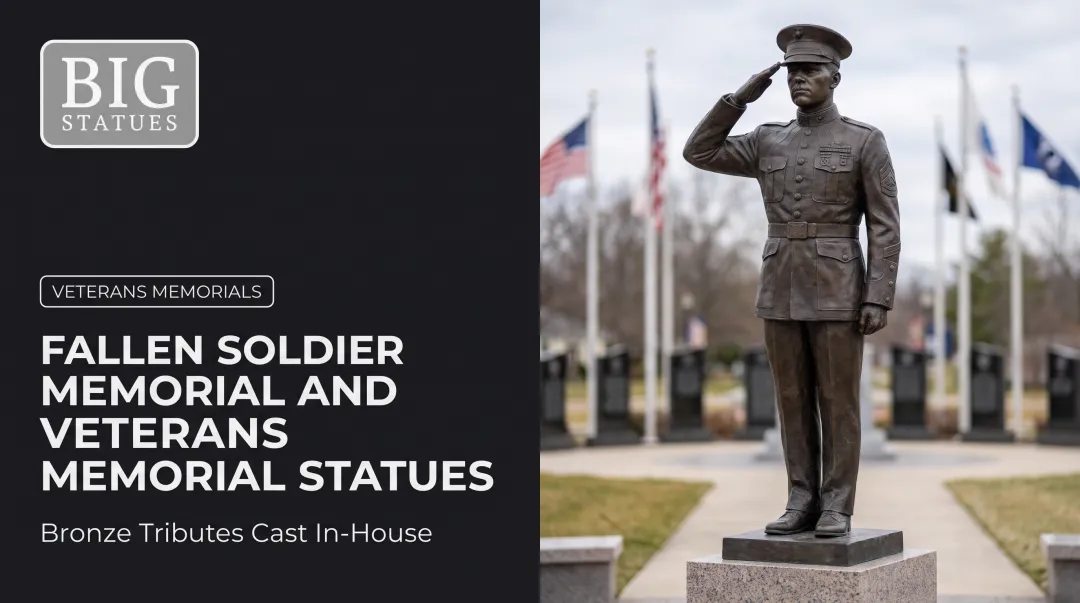
To ease tensions, sculptor Frederick Hart was commissioned to create a more traditional bronze statue, The Three Servicemen, positioned apart from the Wall itself. It was dedicated in 1984, two years after the Wall's original November 13, 1982 dedication.
Construction had moved fast once approved. Ground broke on March 26, 1982, and the site was substantially finished by late October, just in time for that November ceremony.
Is the Vietnam Veterans Memorial a Monument?
The National Park Service officially calls it the "Vietnam Veterans Memorial," not a national monument. Monuments generally commemorate events or achievements. Memorials focus on mourning and remembrance, often centered on loss. This site does both, yet the NPS keeps it under "memorial" in official naming.
Does It Align With Two Other American Monuments?
Here's a detail most visitors miss: the two walls aren't positioned randomly. They meet at a precise angle, 125 degrees and 12 minutes, with one end pointing toward the Washington Monument and the other toward the Lincoln Memorial.
Lin designed that alignment on purpose, placing the Vietnam War in visual conversation with the Washington Monument and the Lincoln Memorial—the nation's founding and its struggle over union and equality.
The Three Core Elements of the Memorial
The Core Elements of the Memorial
The site has four components, each added at a different time for a different purpose.
The Memorial Wall
The Wall is formed by two black granite wings, each about 246 feet 9 inches long, meeting at a tallest point of just over 10 feet. More than 58,000 names appear in chronological order by casualty date, not alphabetically.

Next to each name is a small symbol:
- A diamond marks confirmed deaths
- A plus sign (a cross) marks those still missing in action at war’s end
If a missing service member is later confirmed dead, the plus sign is closed into a diamond. If someone returns alive, a circle is inscribed around the plus sign, though this has happened rarely.
The Three Servicemen Statue
Frederick Hart’s bronze statue, unveiled in 1984, depicts three soldiers—one Black, one white, and one meant to stand for other American ethnic groups. It stands apart from the Wall and supplies the traditional figurative presence critics said the original design lacked.
The Vietnam Women's Memorial
Dedicated November 11, 1993, and designed by Glenna Goodacre, this bronze sculpture depicts three uniformed women tending to a wounded soldier. It honors the roughly 11,000 women who served in Vietnam, most as nurses, out of an estimated 265,000 women who served during the era nationwide.

The In Memory Plaque
Added in 2004 near the Three Servicemen plaza, this plaque honors veterans who died later from service-related causes such as Agent Orange exposure or PTSD-related conditions, deaths that don't qualify for inscription on the Wall itself under Department of Defense casualty criteria.
How to Visit the Vietnam Veterans Memorial
Visiting is straightforward, and admission is free.
Quick facts:
- Admission: Free, no reservations required
- Hours: Open 24 hours a day
- Ranger availability: 9:30 a.m. to 10 p.m. daily
- Location: National Mall, near Constitution Gardens
- Nearest Metro: Foggy Bottom/GWU station, about 0.7 miles away
If you're searching for a specific name, don't wait until you arrive. The Vietnam Veterans Memorial Fund's Virtual Wall of Faces lets you search by name in advance, see a photo where available, and find the exact panel and line location before you go. It makes an emotional visit far less overwhelming.
The Emotional Legacy: How the Memorial Continues to Heal
What makes the Wall different from most memorials isn't just the names. It's the polished granite itself.
The surface reflects each visitor's face directly beside the inscribed names, blurring the line between the living and the dead. The Library of Congress notes that this radical departure from figurative memorial architecture draws millions of visitors annually to walk the granite path.
That face-to-name encounter is only part of how the memorial keeps healing open. Every five years, volunteers gather for the full in-person Reading of the Names. In 2022, that meant reading all 58,281 names aloud over 65 hours across four days. A daily virtual version, started in 2021, reads names tied to that day's casualty anniversary so the ritual continues year-round.

The Wall's emotional approach also reshaped memorial design. The Washington Post's 2022 retrospective argues the memorial "changed everything and nothing." Its abstraction broke centuries of convention, yet few later designers copied it directly. Instead, its influence shows up more broadly: a shift toward memorials that invite personal reflection rather than simply depicting heroism.
Honoring Veterans Through Custom Memorial Sculptures
The Vietnam Veterans Memorial set a national example, but its impact reaches far beyond the National Mall. Towns, veterans organizations, and memorial committees across the country still commission bronze tributes that keep local sacrifices from fading from memory.
At Big Statues, we've spent more than 25 years building museum-quality bronze memorials for exactly this purpose. Our work includes the 8-foot Flying Doves Pentagon Marine War Memorial and a 6-foot Fallen Officer Memorial in Lompoc, California, alongside community projects like the Carrie L. French Memorial.
Every project follows the same core process:
- Research and planning: defining scope, budget, and design references with the committee
- Design approval: sketches and 3D renderings reviewed before any sculpting begins
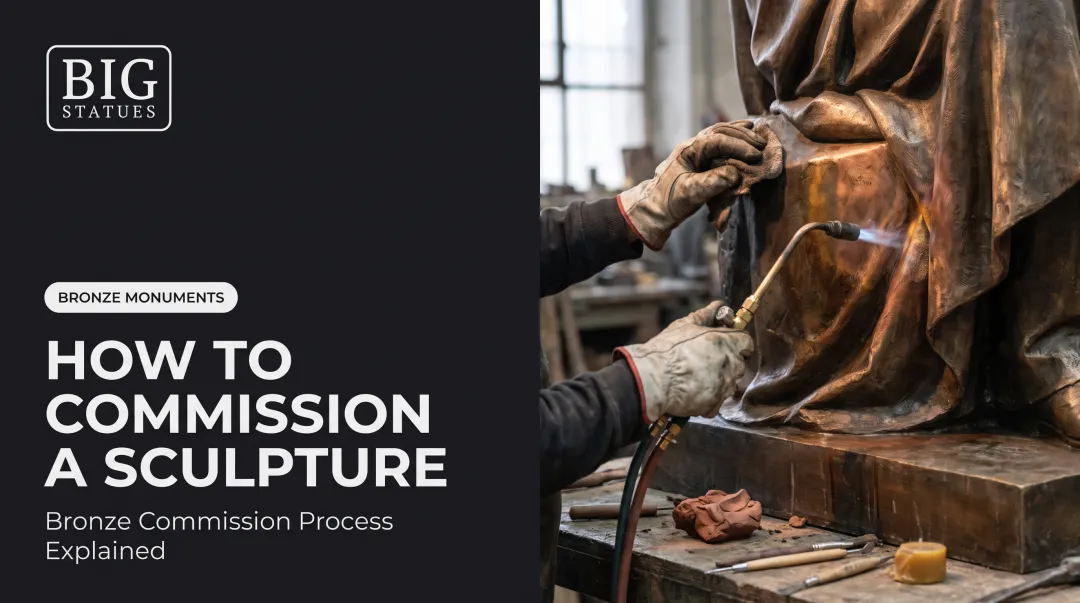
- Clay sculpting: hand-building the figure using a steel armature and hundreds of pounds of clay
- Bronze casting: traditional lost-wax casting using 100% USA bronze heated to nearly 2,250°F
- Delivery and installation: coordinated shipping, setup, and preparation for public unveiling

Most projects take four to eight months from signed agreement to delivery, depending on scale and complexity. Whether a community wants a single figure honoring a fallen soldier or a broader tribute to a military unit, the goal matches what Maya Lin achieved on a national scale: a lasting place to remember.
Frequently Asked Questions
Is the Vietnam Veterans Memorial a monument?
It's officially classified by the National Park Service as a memorial, not a national monument. It still commemorates service and sacrifice the way many traditional monuments do.
Does the Vietnam Veterans Memorial align with two other American monuments?
Yes. The Wall's two ends point toward the Washington Monument and the Lincoln Memorial, meeting at a precise 125-degree, 12-minute angle that ties the site into the National Mall's broader historical layout.
Who designed the Vietnam Veterans Memorial?
Maya Lin, a 21-year-old Yale senior, won a blind national competition that drew 1,421 entries—judges selected the design without knowing her identity.
How many names are on the Vietnam Veterans Memorial Wall?
More than 58,000 names appear on the Wall, listed chronologically by date of casualty rather than alphabetically. Names of those missing in action are included based on the date they were reported missing.
Is the Vietnam Veterans Memorial free to visit?
Yes. Admission is free and the site is open 24 hours a day. National Park Service rangers are on-site to answer questions from 9:30 a.m. to 10 p.m. daily.
What is the difference between a diamond and a cross on the Wall?
A diamond marks a confirmed death, while a plus sign (often called a cross) marks someone considered missing in action. If a missing service member is later confirmed deceased, the symbol is changed to a diamond.