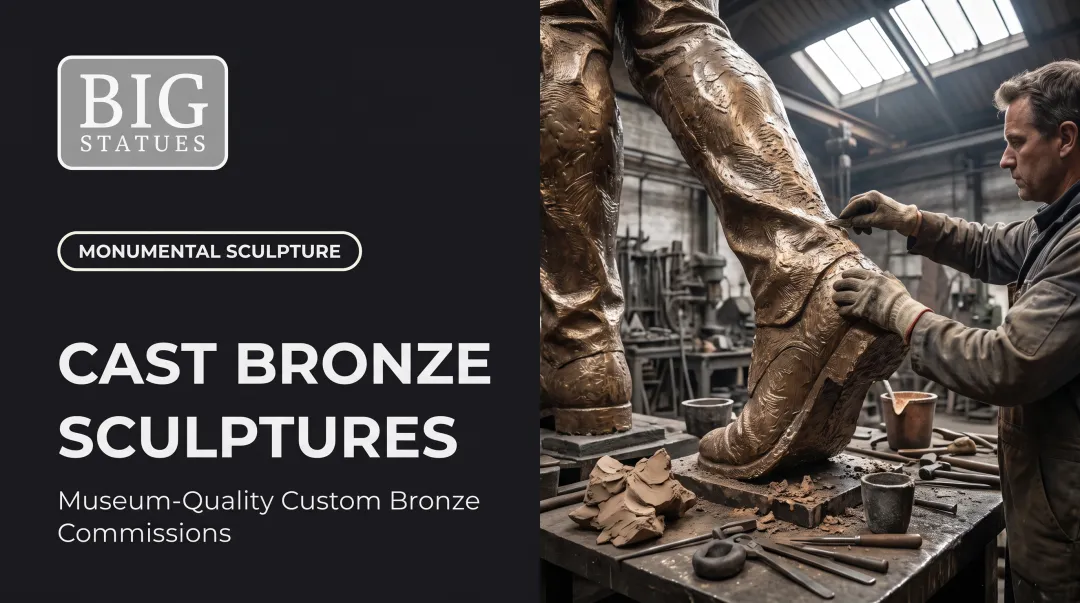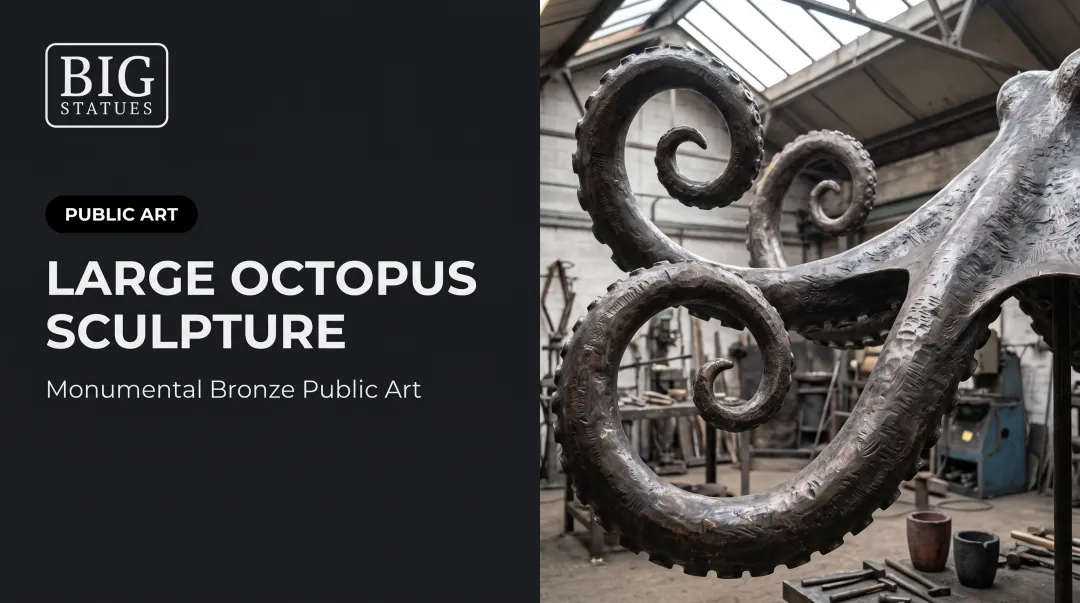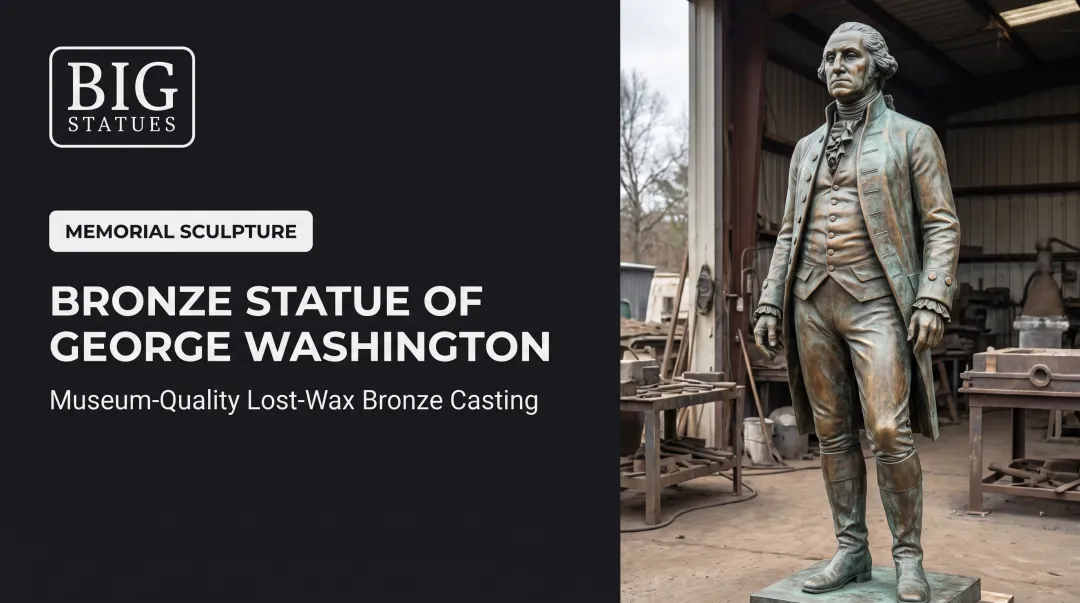

Most people only ever see the finished piece on a courthouse lawn or campus quad. What they don't see are the months of skilled labor behind it: sculptors building clay models by hand, foundry technicians pouring molten bronze at nearly 2,000°F, and finishers chasing every seam until it disappears.
Below, we'll walk through the full lost-wax bronze casting process, alternative metal fabrication methods, material choices, and the factors that drive timeline and cost.
Key Takeaways
- Lost-wax bronze casting follows four stages: model, mold, cast, and finish
- Steel and aluminum pieces are usually welded and assembled, not cast
- Material choice drives durability, weight, cost, and indoor vs. outdoor fit
- Projects can take a few months to more than a year based on size and detail
- An in-house foundry cuts coordination risk and helps hold delivery dates
What Is the Metal Sculpture Making Process?
The metal sculpture making process is the sequence of design, sculpting, mold creation, and metal forming that turns a concept into a physical, three-dimensional artwork. The end goal is a piece that's durable, detailed, and appropriate for wherever it will live, whether that's a windswept memorial park or an air-conditioned corporate lobby.
There are two fundamentally different approaches:
- Casting: Used for bronze. Molten metal is poured into a mold and hardens into shape. This is an additive process.
- Fabrication/welding: Used for steel and aluminum sheet or bar stock. Metal is cut, bent, and joined together. This is an assembly process.
Carving, by contrast, is a subtractive process (think stone or wood) and isn't how bronze or fabricated metal statues are made — a common point of confusion we'll address later.
Why Bronze Casting Is the Preferred Process for Commissioned Statues
Municipalities, veterans' groups, and universities choose bronze because it has been the material of choice for figurative and commemorative art for over 2,000 years. That track record matters when a memorial needs to stand for generations, not decades.
Longevity and Tradition
Bronze's resistance to weathering makes it the top pick for outdoor public art. The National WWI Memorial's 38-figure, 25-ton bronze composition and the Vietnam Veterans Memorial's bronze figure groups show this tradition is still central to American civic memory.
Bronze also develops a protective patina over time rather than deteriorating. With basic maintenance like annual waxing, it can last centuries outdoors—far less upkeep than metals that crack, rust through, or need full refinishing.
What Goes Wrong Without Foundry Expertise
Not every foundry can deliver consistent results. Common failure points include:
- Warping from uneven cooling or poor shell construction
- Poor detail capture when rubber molds aren't built to spec
- Structural failure from inadequate welding at section joints
Avoiding those failures takes control at every stage. Big Statues handles design, sculpting, mold-making, and casting under one roof, using 100% USA bronze (roughly 97% copper, 2% tin, 1% zinc). Keeping each stage in-house means fewer handoffs and fewer chances for quality to slip.
How Metal Sculptures Are Made (Step-by-Step Bronze Casting Process)
The journey from concept sketch to finished statue follows a clear sequence: sculpt, mold, cast, finish. Reference photos, client feedback, and either a hand-sculpted clay model or a digital model all feed into the process.
The real transformation happens at the pour, when raw bronze becomes a permanent record of the sculptor's work. Temperature control and experienced foundry hands keep that stage precise.
Step 1: Concept, Sketch, and Client Approval
Designers translate photos, historical references, or a client's vision into an approved concept sketch. This typically starts with a research-and-planning phase covering scope, materials, budget, and timeline, followed by sketches and scale miniatures. Each phase needs client sign-off before work advances.
Step 2: Sculpting the Clay or Digital Model
Sculptors build a full-scale model to finalize proportions and detail. In practice, this often means constructing a steel armature, attaching a foam core, sealing it, and applying hundreds of pounds of hot clay by hand. Digital renderings frequently guide this stage before the physical sculpting begins.
Step 3: Mold-Making (Rubber and Ceramic Shell)
A flexible rubber mold, made of polyurethane or silicone, captures every detail of the clay sculpture. A plaster "jacket" reinforces the rubber mold from outside. After the rubber mold comes off the clay, wax is poured in to create a positive replica. That wax piece is dipped repeatedly into ceramic slurry until a hard, heat-resistant shell builds up around it.
Step 4: Bronze Pouring and Casting
After the wax is melted out of the shell (the "lost wax" step that gives the process its name), the empty ceramic cavity is ready for metal. Bronze is heated to roughly 1,900–2,250°F, depending on the foundry and alloy, then poured into the shell. The casting cools for several hours before the shell is broken away.

Step 5: Metal Chasing, Welding, and Assembly
Large statues are cast in sections and then welded together. Foundry technicians sandblast away ceramic residue and repair surface texture, a process called "chasing," until the weld seams visually disappear into the sculpture's surface.
Step 6: Patina, Finishing, and Delivery
Chemical treatments combined with heat develop the statue's final color, protecting the bronze and setting its final surface tone. Once finished, the piece is packaged for shipping and coordinated for delivery and installation.
Big Statues manages every one of these steps in-house, from initial design through molding and casting, which helps ensure consistent, museum-quality results and dependable delivery timelines for municipalities, universities, and corporate clients alike.
Other Metal Sculpture Making Methods (Welding & Fabrication)
Not every metal artwork is cast. Fabrication is the go-to method for abstract, modern, or smaller decorative pieces where a lifelike, highly detailed figure isn't the goal.
The process involves:
- Cutting sheet or bar stock using CNC lasers, plasma cutters, or waterjets
- Bending and forming metal into the desired shape
- Joining pieces with MIG (GMAW) or TIG (GTAW) welding
- Grinding and finishing welds for a clean appearance
Typical materials include mild steel, stainless steel, aluminum, copper, and brass. Each offers different tradeoffs in weight, cost, and weather resistance. None replicate the fine facial and anatomical detail that lost-wax bronze casting achieves.

Key Factors That Affect the Metal Sculpture Making Process
Several variables determine how long a project takes and what it costs:
- Size and detail level: Larger statues with fine facial or anatomical detail require more sculpting time and more complex, sectioned molds.
- Material choice: Bronze, steel, and aluminum differ in cost, weight, and weather resistance.
- Placement: Indoor pieces have simpler finishing needs than outdoor installations facing rain, UV, and temperature swings.
- Foundry capacity: Equipment quality and technician experience directly affect turnaround and consistency.
- Regulatory approvals: Public and municipal installations often require permitting or committee sign-off, which can extend timelines.
Most custom bronze commissions run four to eight months from signed agreement to delivery. Highly complex or oversized pieces, like monument-scale class-ring statues at 7–10+ feet, can take longer.

Common Misconceptions About How Metal Sculptures Are Made
"Metal sculptures are carved from solid metal." Not for bronze castings. Casting is additive: molten metal fills a mold. The artist may carve details into clay or wax, but the final bronze body is poured, not chiseled.
"Bronze and steel art use the same process." They don't. Bronze is cast through the lost-wax method; steel and aluminum pieces are typically welded and fabricated from sheet or bar stock.
"Casting is fast." Quality bronze work takes weeks to months. The process runs through sculpting, mold-making, wax casting, ceramic shell building, pouring, cooling, welding, and finishing. Rushing any step risks defects.
"Patina is just natural weathering." Patina color comes from controlled chemical treatments combined with heat, applied deliberately by foundry technicians, not left to chance outdoors.
Frequently Asked Questions
How much does a metal sculpture cost?
Cost depends on size, material, detail level, and casting complexity. Custom bronze commissions often start around $5,000 and scale significantly for life-size or monument-scale work, so a project-specific quote is essential.
What are the different types of metal sculptures?
Common types include cast bronze statues, welded steel or aluminum art, wall-mounted metal pieces, and kinetic sculptures. Each uses different techniques suited to its intended look and setting.
What is it called when you make art out of metal?
Terms include metal sculpting, metalworking, welding art, and bronze casting or foundry work. The specific term usually depends on whether the piece is cast or fabricated.
How long does it take to make a bronze statue?
Timelines typically run four to eight months, though larger or highly detailed monuments can take over a year depending on scale, complexity, and approval processes.
Can metal sculptures be customized to look like a specific person?
Yes. Custom portrait and memorial statues are commonly created using client-supplied photographs and reference images, with staged approvals at each phase to confirm likeness.
Is bronze better than steel for outdoor sculptures?
Bronze offers superior longevity and a protective patina with minimal maintenance, making it the standard for memorials. Steel can work outdoors too, but generally needs more frequent coating and upkeep.