
The appeal makes sense. Octopuses are strange, intelligent, and endlessly sculptural. But many buyers stall out before they even get a quote because they don't know what material to choose, what size fits their site, or how the commissioning process actually works.
This guide covers the symbolism behind octopus art, the material trade-offs, a few famous examples worth studying, and exactly how a museum-quality bronze octopus sculpture gets made from concept to installation.
Key Takeaways
- Octopus sculptures carry multiple symbolic meanings, from mythological danger to marine conservation
- Bronze beats fiberglass and resin for outdoor durability, but still needs regular maintenance
- Custom commissions move from consultation through clay, molds, and lost-wax casting in 4–8 months
- Big Statues designs, sculpts, and casts every piece in-house using 100% USA bronze
What Does an Octopus Sculpture Symbolize?
Octopus art doesn't have one single meaning. It carries a few distinct meanings, and the one you choose should drive the whole design.
Intelligence and adaptability is the most common modern association. Octopuses have a complex nervous system, and artists lean into that: flexible tentacles read as problem-solving, curiosity, and resourcefulness.
Mythology and the unknown add a darker layer. The Kraken, from Scandinavian folklore, shows up in art and legend as a ship-destroying sea monster, according to the Natural History Museum. Japanese art has its own octopus tradition as well, most famously in Hokusai's early 19th-century work held by the British Museum.
Conservation is a more recent reading. The Smithsonian's Washed Ashore project built "Octavia," a giant octopus made entirely from beach debris, to call out ocean pollution while still nodding to the animal's curiosity.
Depending on the tradition, an octopus sculpture can stand for intelligence and adaptability, mythological danger and the unknown, or marine conservation. The strongest commissions pick one of those threads and build the design around it, instead of blending all three into something vague.
Materials and Design Options for Large Octopus Sculptures
Material choice determines how your sculpture ages, not just how it looks on day one.
| Material | Best for | Trade-off |
|---|---|---|
| Bronze | Outdoor, long-term, museum-quality display | Periodic waxing and cleaning |
| Fiberglass | Lightweight indoor/outdoor pieces on a tighter budget | Coatings fade under UV and weather |
| Stainless steel | Contemporary, reflective outdoor finish | Needs the right alloy (Type 316L near salt air) |
| Resin | Smaller, colorful accent pieces | Weakest long-term outdoor performance |
Bronze is the usual choice for large outdoor octopus commissions. Patinated bronze holds up well outdoors when washed and waxed on a regular schedule. That is ongoing care, not a set-and-forget finish.

Polymer options are less forgiving. Their coatings can dull or wear under sun and moisture, which shows sooner on a piece meant to last decades in a plaza or entryway.
Design Variations Worth Considering
Large octopus sculptures generally fall into two camps:
- Realistic marine-life detailing — accurate suckers, skin texture, and tentacle movement
- Abstract or stylized forms — simplified shapes that still read clearly as an octopus
You can also group octopuses with other elements. Big Statues produced a Jupiter, Florida installation with one large central octopus surrounded by smaller ones on a pedestal in a landscaped setting. That arrangement adds movement and reads well from multiple angles in a plaza or entryway.
Once the form is set, fabrication choices lock in durability and finish. Big Statues designs, sculpts, and molds every piece in-house from American bronze (about 97% copper, 2% tin, and 1% zinc) with a bronze wall roughly ¼ inch thick. Chemical and thermal patina work during finishing lets you dial in the final surface color and tone.
Famous Large Octopus Sculptures for Inspiration
Two well-known pieces show how scale and detail can pull in opposite directions—and why both matter when you commission.
"The Arms of Friendship" at the Oculus, NYC. Artists Gillie and Marc's cast-bronze octopus measured 36 feet and weighed 7 tons, according to the piece's official 2024 World Trade Center listing. Its tentacles cradled other animal figures, and the installation ran for a full year as an interactive public art piece framed around wildlife conservation. For public sites, it sets a clear bar on monumental scale and how visitors actually engage with the work.
Hamish Mackie's bronze octopus. This 2021 private commission is a craftsmanship benchmark rather than a scale one. Mackie individually sculpted 665 suckers in plasticine before mold-making and casting. Dimensions were never publicized, and the piece stays in private hands—yet the sucker-by-sucker work shows what full anatomical accuracy looks like in bronze.
Pieces at either end of that spectrum show up in the same kinds of settings:
- City plazas and public squares
- Corporate campuses and lobbies
- Aquariums and waterfront parks
- Private gardens and estates
- University and civic spaces
How Custom Bronze Octopus Sculptures Are Commissioned
Commissioning a large bronze octopus follows a structured, multi-stage process. Big Statues handles every step in-house.
- Consultation and design. You meet with the team, share reference images, and discuss size, setting, budget, and whether you want a realistic or abstract design. Sketches and scale miniatures come out of this stage.
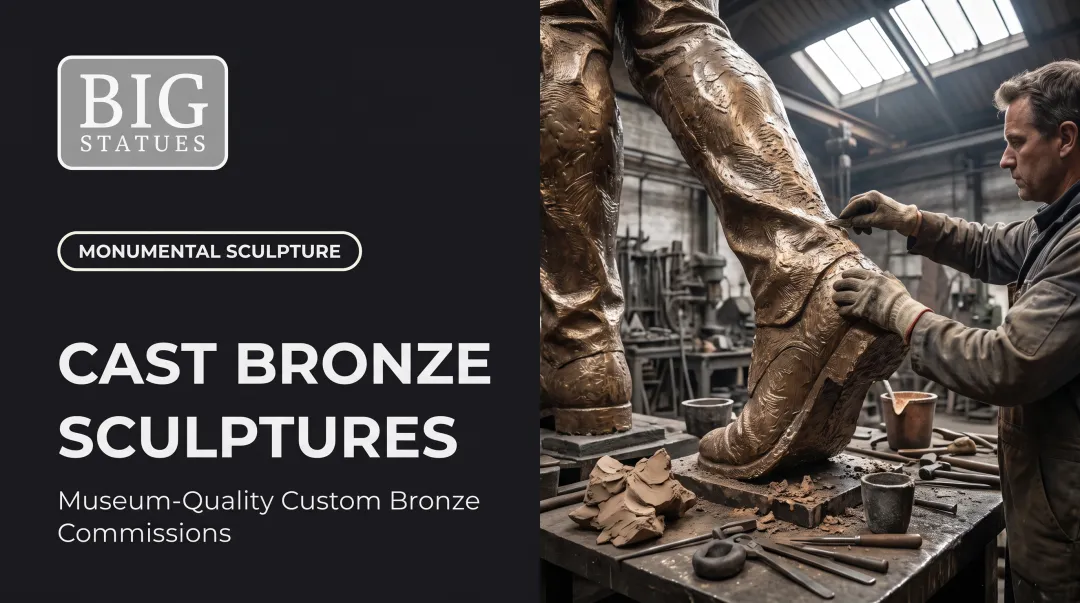
- Digital and clay modeling. Sculptors start with sketches and 3D renderings, then build a steel armature, foam core, and latex seal before hand-sculpting hundreds of pounds of hot clay into the final form.
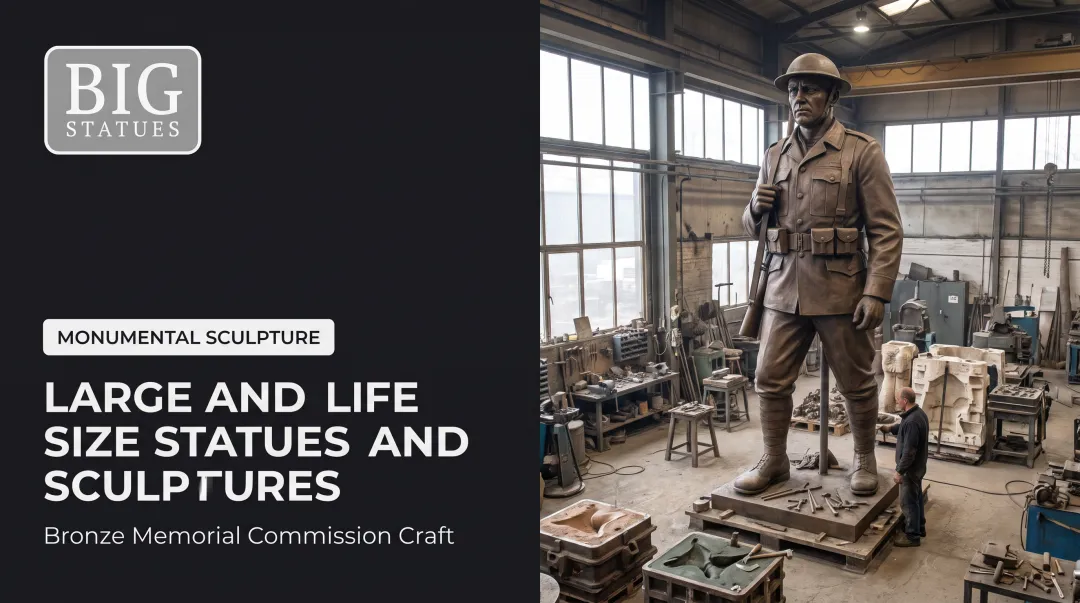
- Mold-making. The finished clay sculpture is covered in layers of polyurethane or silicone rubber to capture every detail, then reinforced with a rigid plaster jacket.
- Lost-wax casting. The mold produces a wax positive that is inspected and repaired ("wax chasing"), then dipped in ceramic slurry. After the wax burns out, bronze heated to nearly 2,250°F is poured into the shell.
- Finishing. Cooled bronze sections get welded together, cleaned, textured, and finished with chemical or thermal patina application before final quality inspection.
Most projects run 4 to 8 months from signed agreement to delivery, depending on size, complexity, and approval timelines. Big Statues doesn't move to the next stage until the client has fully approved the current one, which keeps surprises out of the process.

That same gated process shows up in delivered work: public art for West Plains, Missouri ("Feel the Love" and "I, Too, Am America"), and the bronze statue created for Bob Moore, founder of Bob's Red Mill, for his 90th birthday at the company's Oregon headquarters. Large octopus commissions follow the same checkpoints from first sketch to final patina.
Buying Guide: What to Consider Before Commissioning
Before you request a quote, think through these factors:
- Location: Indoor pieces have more material flexibility; outdoor installations should prioritize bronze or marine-grade stainless steel.
- Size and scale: A single octopus versus a grouping (like the Jupiter installation) changes both cost and footprint.
- Budget: Custom bronze projects generally start at a minimum of $5,000, with final pricing determined by size, detail, and scope.
- Lead time: Plan for 4–8 months minimum, longer for highly complex or monumental pieces.
Research the foundry, not just the design. Before you commit, ask:
- Where the bronze comes from
- Whether design, sculpting, and molding happen under one roof
- What their delivery track record looks like
A foundry that outsources multiple stages introduces more points of failure, especially at tentacle joints and weld seams.
If you need a large, weatherproof piece, skip mass-market décor listings and commission from a bronze studio built for scale.
Where Can I Buy Octopus Clay Sculptures?
Small decorative clay or resin octopus pieces are widely available through art retailers and marketplaces for home décor. Large, durable, outdoor-ready work is a different category—it needs a custom bronze foundry, not a product listing.
Frequently Asked Questions
What do octopuses symbolize in art?
In modern art, octopuses often stand for intelligence, adaptability, and mystery. Maritime mythology links them to danger and the unknown (as with the Kraken), while contemporary projects also use them to speak to marine conservation.
Where can I buy octopus clay sculptures?
Decorative clay pieces are sold through art retailers, but they are not built for large outdoor display. For a durable, large-scale octopus, commission a custom bronze foundry rather than buying a stock clay product.
How much does a large custom octopus sculpture cost?
Cost depends on size, detail level, and project scope. Custom bronze commissions typically start around $5,000, with final pricing set after a consultation.
How long does it take to create a custom bronze octopus sculpture?
Most custom bronze sculptures take 4 to 8 months from signed agreement to delivery, depending on size, complexity, and how quickly approvals move through each stage.
Is bronze or fiberglass better for an outdoor octopus sculpture?
Bronze holds up better long-term outdoors when maintained with regular washing and waxing. Fiberglass is lighter and cheaper upfront, but its surface coatings fade faster under sun and weather.
Can octopus sculptures be customized with other design elements?
Yes. Custom commissions can change scale, patina finish, and composition—including groupings of multiple octopuses or pairings with other animals or figures—to fit the site and story you want to tell.