
But commissioning isn't as simple as picking a design from a catalog. Outcomes vary widely depending on the sculptor's experience, the foundry's process, your budget, and how well everyone communicates along the way.
This guide walks through the full commissioning process: what you need before you start, the step-by-step production timeline, cost factors, and mistakes that derail projects. Whether you're a municipality, a veterans group, or a family honoring a loved one, you'll know what to expect.
Key Takeaways
- Find the right sculptor/foundry, share your vision, approve a maquette, cast in bronze, then install
- Timelines typically run 6-18 months, though some studios complete standard projects in 4-8 months
- Budget, purpose, and material choice drive the biggest cost differences
- In-house design-to-casting studios (like Big Statues) cut delays and communication gaps
- Contracts must define payment schedules, timelines, and ownership rights
How to Commission a Sculpture
Step 1: Define Your Vision and Purpose
Start by identifying who or what the sculpture will honor. Is it a memorial, a mascot, a brand landmark, or a public figure? Gather reference photos, sketches, or historical documentation early.
Decide on placement:
- Indoor vs. outdoor: affects material choice and finishing
- Site interaction: how it will be viewed, from what angles, and at what scale relative to surroundings
- Research needs: contacting family for a memorial, or verifying historical accuracy for a public monument
Skipping this step is where most projects go sideways later. The more detail you provide upfront, the fewer costly revisions you'll face during sculpting.
Step 2: Choose the Right Sculptor or Foundry
Look at portfolios for style, scale of past work, and subject-matter experience. A sculptor skilled at pet memorials may not have the engineering background for a monumental war memorial.
Key questions to ask:
- Does the studio handle sculpting and casting in-house, or outsource to a third-party foundry?
- Can they provide references and photos of completed installations?
- Have they worked on projects similar in scale to yours?
The National Sculpture Society recommends narrowing your search to 3-5 finalists after reviewing resumes, portfolios, and letters of interest, and compensating finalists for proposals and travel.
Studios that manage design, sculpting, molding, and casting under one roof (Big Statues is one example) cut the back-and-forth that comes with coordinating separate vendors, with fewer handoffs where miscommunication can start.

Step 3: Consultation, Proposal, and Contract
Be upfront about budget, timeline, and vision during your first consultation. Vague expectations here lead to disappointing proposals later.
Your proposal should cover:
- Cost breakdown: materials, labor, foundry work, shipping, installation
- Payment milestones: tied to specific approval stages, not arbitrary dates
- Estimated completion date: with realistic buffer for foundry scheduling
Your contract needs to go further than price. It should address:
- Ownership of the physical piece vs. copyright (these are often separate: the artist frequently retains copyright even after the client owns the object)
- Insurance during production and transport
- Installation responsibilities and who bears the cost of delays
Philadelphia's model public-art agreement is a useful reference: physical title passes at final acceptance, but the artist retains copyright while licensing specific reproduction rights to the client. Don't assume payment means you own everything.
Step 4: Maquette Approval and Clay Sculpting
Before any full-size work begins, you'll review a small-scale maquette. This is your chance to request changes to pose, expression, or composition while adjustments are cheap.
Once you approve the maquette, the sculptor scales up. This stage is labor-intensive:
- A steel armature and foam core form the internal structure
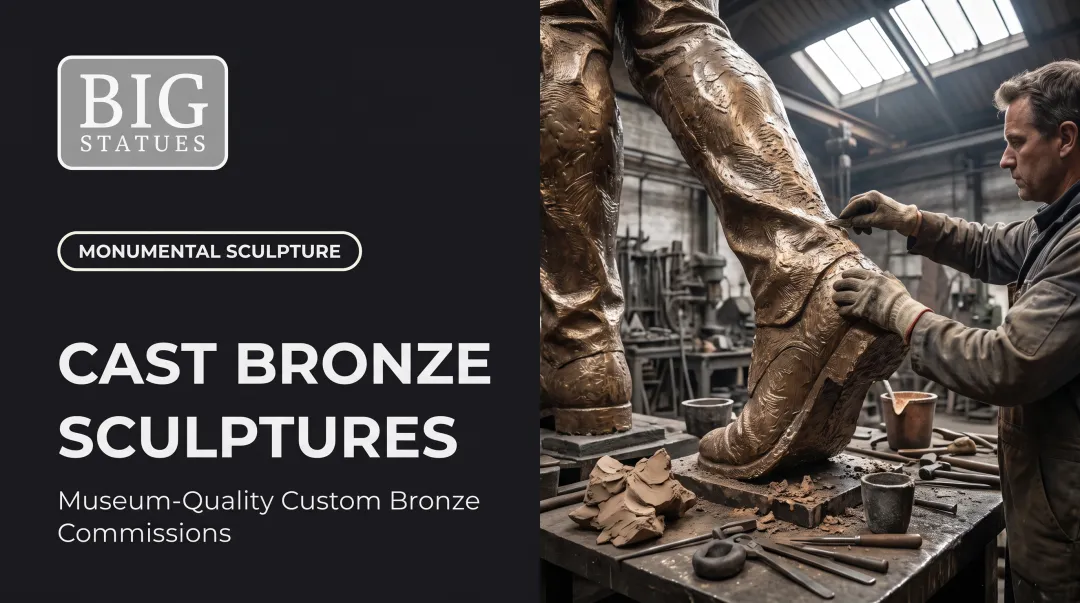
- Sculptors apply hundreds of pounds of hot clay by hand
- Details are refined over countless hours of sculpting
Stay engaged here. Ask for progress photos so you're not surprised by the final form. Approval at this stage is your last chance to change the design before it's cast permanently in bronze.
Step 5: Bronze Casting and Finishing
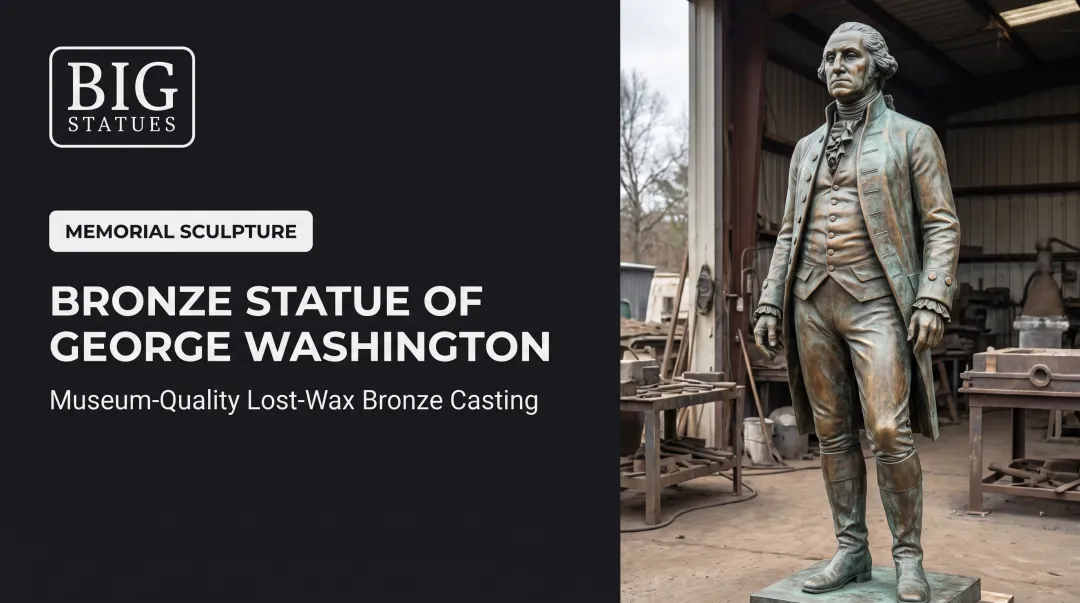
This is where clay becomes metal, through the lost-wax casting process:
- Mold-making: the clay sculpture is covered in polyurethane or silicone rubber, then supported by a rigid plaster jacket
- Wax replication: the mold produces a wax positive, which technicians inspect and repair (wax chasing)
- Ceramic shell: the wax replica is dipped in ceramic slurry to form a heat-resistant investment mold, then the wax is melted out
- Pouring bronze: 100% USA bronze, heated to nearly 2,250°F, fills the ceramic mold and cools for hours
- Finishing: sections are welded together, ceramic remnants are sandblasted off, and chemical/heat treatments create the final patina
Big Statues casts bronze at roughly 97% copper, 2% tin, and 1% zinc, with a bronze layer about ¼ inch thick. That mix aligns with durable alloys used across the industry, per Musée Rodin's documentation of the lost-wax process.

Patina matters for more than looks. It's controlled corrosion that protects the surface. Review a physical patina sample before final approval, and confirm what maintenance it will require down the road.
Step 6: Delivery, Installation, and Dedication
Once the piece is finished, transportation and site prep take center stage. Coordinate:
- Foundation and pedestal: confirm the site can support the sculpture's weight
- Transportation logistics: crating, insurance, and delivery scheduling
- Lighting: especially for outdoor public installations viewed at night
For public or community pieces, many clients plan a dedication ceremony or unveiling.
This is also the time to plan ongoing care. Bronze needs periodic washing and waxing to protect the patina and limit streaking from pollutants. It is not a set-it-and-forget-it material.
When Should You Commission a Sculpture?
Commissioning makes sense when you want a fully original, one-of-a-kind piece rather than something pulled from existing inventory. Common scenarios include:
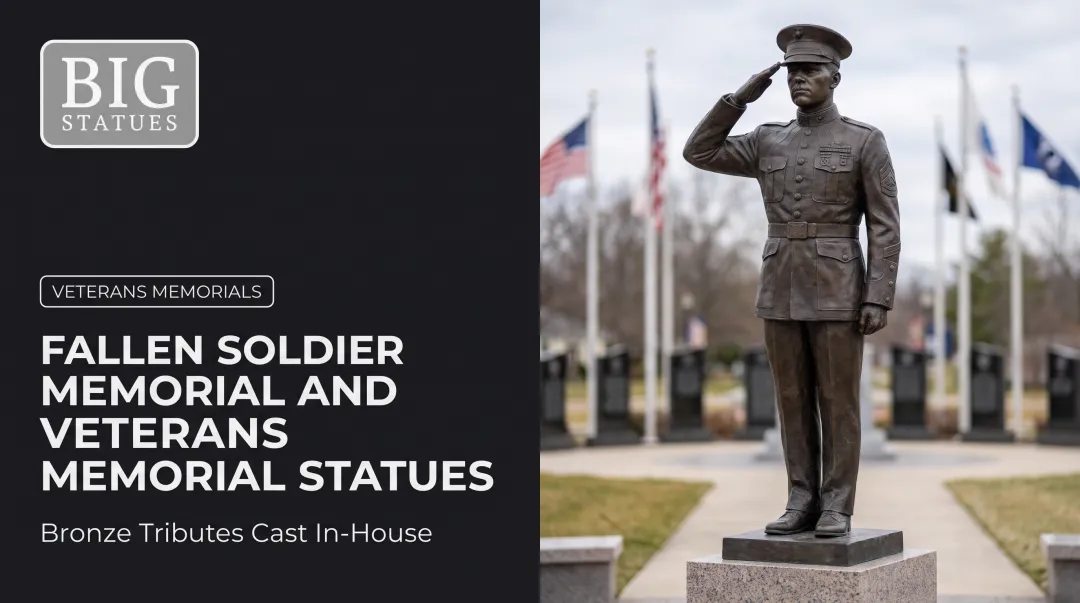
- Memorials for fallen officers or veterans
- Mascot statues for universities and athletic programs
- Corporate brand landmarks for lobbies or campuses
- Family memorial statues honoring a loved one
It may not be the right fit if you're on an extremely tight timeline or a budget under roughly $5,000. In those cases, a pre-designed piece is usually more practical.
Custom bronze needs time for sculpting, casting, and finishing that stock work does not.
What You Need Before Commissioning a Sculpture
Preparation upfront prevents costly changes and delays later.
Budget and Timeline Readiness
Set a full budget range before you contact a studio—sculpture, base or pedestal, shipping, and installation, not artwork alone. A 10–15% contingency covers design refinements and site work.
Plan for a realistic timeline. Standard commissions often run 4-8 months from signed agreement to delivery. Larger or public-procurement projects can stretch to 18 months or more once approvals, fundraising, and engineering are factored in.
Reference Materials and Approvals
Before starting, gather:
- Photos and measurements of the subject
- Historical documentation (for public monuments)
- Family or committee sign-off on the concept
Site and Installation Readiness
Confirm your site can physically support the sculpture. Check:
- Foundation strength for the statue's weight
- A plan for the base or pedestal
- Access for delivery and installation equipment
Key Factors That Affect Your Sculpture's Cost and Outcome
Price and results hinge on a handful of controllable factors.
Size and Scale
Larger, life-size, or monumental pieces need more material, labor, and casting time. A 9–10-foot bronze statue costs far more than a half-scale figure for that reason alone. Tennessee's David Crockett commission, for example, was budgeted around $600,000 for a monumental capitol installation, according to its official RFP. Treat that figure as a benchmark for one large public project, not a general market price.
Material Choice
Bronze holds up outdoors and develops a protective patina over decades. Resin and stone alternatives can fade, chalk, or crack and flake depending on exposure. Big Statues casts in-house with 100% USA bronze so that durability is built into the piece from the start, not left to a later finish or coating.
Level of Detail and Complexity
Multiple figures, intricate clothing, or dynamic poses add sculpting and mold-making time. A single static figure is a different project than a multi-figure narrative scene, and that gap shows up in both timeline and price.
Foundry Location and Process
In-house casting versus outsourcing to a third-party foundry affects quality control, turnaround, and how fast you get answers when questions come up. Fewer handoffs usually mean fewer communication gaps and fewer surprises late in production.
Common Mistakes When Commissioning a Sculpture
Avoid these pitfalls:
- Skipping reference research — approving a design without enough photo or historical detail often leads to likeness problems later
- Choosing on price alone — a low bid means little if the sculptor lacks experience at your scale or subject matter
- Leaving terms verbal — payment schedules, timelines, and ownership rights belong in a written agreement before work begins
- Ignoring site prep — waiting until the piece is finished to plan the foundation, pedestal, or installation access delays install and adds cost
Frequently Asked Questions
How much does it cost to commission a sculpture?
Cost depends on size, material, complexity, and sculptor experience. Most studios, including Big Statues, start custom bronze projects at a minimum of $5,000, then provide a detailed quote after consultation.
What does it mean to commission a sculpture?
It means hiring an artist to create a custom, one-of-a-kind piece built specifically around your vision. This differs from buying existing artwork, since nothing like it exists until you commission it.
Can you commission a sculpture?
Yes. Individuals, municipalities, corporations, and organizations can all commission a sculpture, provided they have a clear vision and a workable budget.
What are portrait commissions?
Portrait commissions are sculptures created to capture the likeness of a specific person. They're common for memorials, corporate honors, and family keepsakes.
Is commissioning fan art legal?
Commissioning copyrighted characters can raise licensing issues, since copyright owners control derivative works and public display. Discuss usage rights with your artist and secure written permission before design work begins.
How long does it take to commission a bronze sculpture?
Most bronze commissions take 6-18 months. Standard-sized projects can finish faster, often in 4-8 months from signed agreement to delivery, depending on size and complexity.