

.png)
October 8, 2026 11:43 AM
How Is a Bronze Statue Installed? What to Expect From Delivery to Final Placement
Installing a bronze statue takes careful planning, the right foundation, proper anchoring, and often specialized equipment. This guide walks through what to expect before, during, and after installation, including site preparation, transportation, cranes, pedestals, permits, and final placement.
Bronze Statue Installation: Everything You Need to Know
Creating a custom bronze statue takes months of design, sculpting, molding, casting, welding, and finishing.
But once the statue is complete, there is still one major step left: installation.
Installing a bronze statue involves much more than simply setting it in place. Depending on the size and location of the sculpture, the process may include site preparation, a concrete foundation, transportation, heavy lifting equipment, anchoring, and coordination between several different teams.
Understanding the installation process ahead of time can help make sure everything goes smoothly when the statue arrives.
What Happens Before a Bronze Statue Is Installed?
Installation planning often begins well before the finished statue leaves the foundry.
One of the first decisions is determining exactly where the sculpture will be placed.
The location can affect:
- The size and orientation of the statue
- The type of foundation or pedestal required
- How the sculpture will be delivered
- Whether a crane or other lifting equipment will be needed
- Truck and equipment access
- Landscaping and surrounding features
- Local permits or approval requirements
For public monuments, universities, businesses, parks, and other large projects, installation may also involve architects, engineers, contractors, landscapers, or local officials.
Planning these details early can help prevent delays or surprises later.
Does a Bronze Statue Need a Foundation?
Many permanent outdoor bronze statues are installed on a concrete foundation, pedestal, or other engineered base.
The exact type of foundation depends on the statue's size, weight, shape, location, and surrounding conditions.
A life-size statue may require a relatively straightforward concrete pad, while a large monument or multi-figure sculpture may need a much more substantial foundation.
Several factors can influence the foundation, including:
- Statue weight
- Statue height
- Wind exposure
- Soil conditions
- Local climate
- Pedestrian traffic
- Seismic or structural requirements
- Local building codes
For larger public installations, a structural engineer or local contractor may be involved in determining the appropriate foundation.
How Is a Bronze Statue Anchored?
Bronze statues are typically designed with an anchoring system that allows them to be securely attached to their foundation or pedestal.
Mounting hardware may be built directly into the sculpture during fabrication.
During installation, these mounting points are aligned with the prepared foundation and securely anchored in place.
The goal is to make sure the statue is stable, level, and capable of remaining safely in position for many years.
This is especially important for outdoor sculptures that may be exposed to wind, weather, public interaction, and other environmental conditions.
How Is a Bronze Statue Transported?
Large bronze sculptures require careful transportation.
Once the sculpture is complete and inspected, it is protected and prepared for shipping.
Depending on the size of the statue, it may be:
- Wrapped and padded
- Secured inside a custom crate
- Transported on a truck or trailer
- Shipped in multiple sections for larger projects
The shipping method depends largely on the dimensions, weight, destination, and complexity of the sculpture.
For oversized monuments, transportation may require additional planning to make sure the route and installation site can accommodate the delivery vehicle.
Is a Crane Needed to Install a Bronze Statue?
Sometimes.
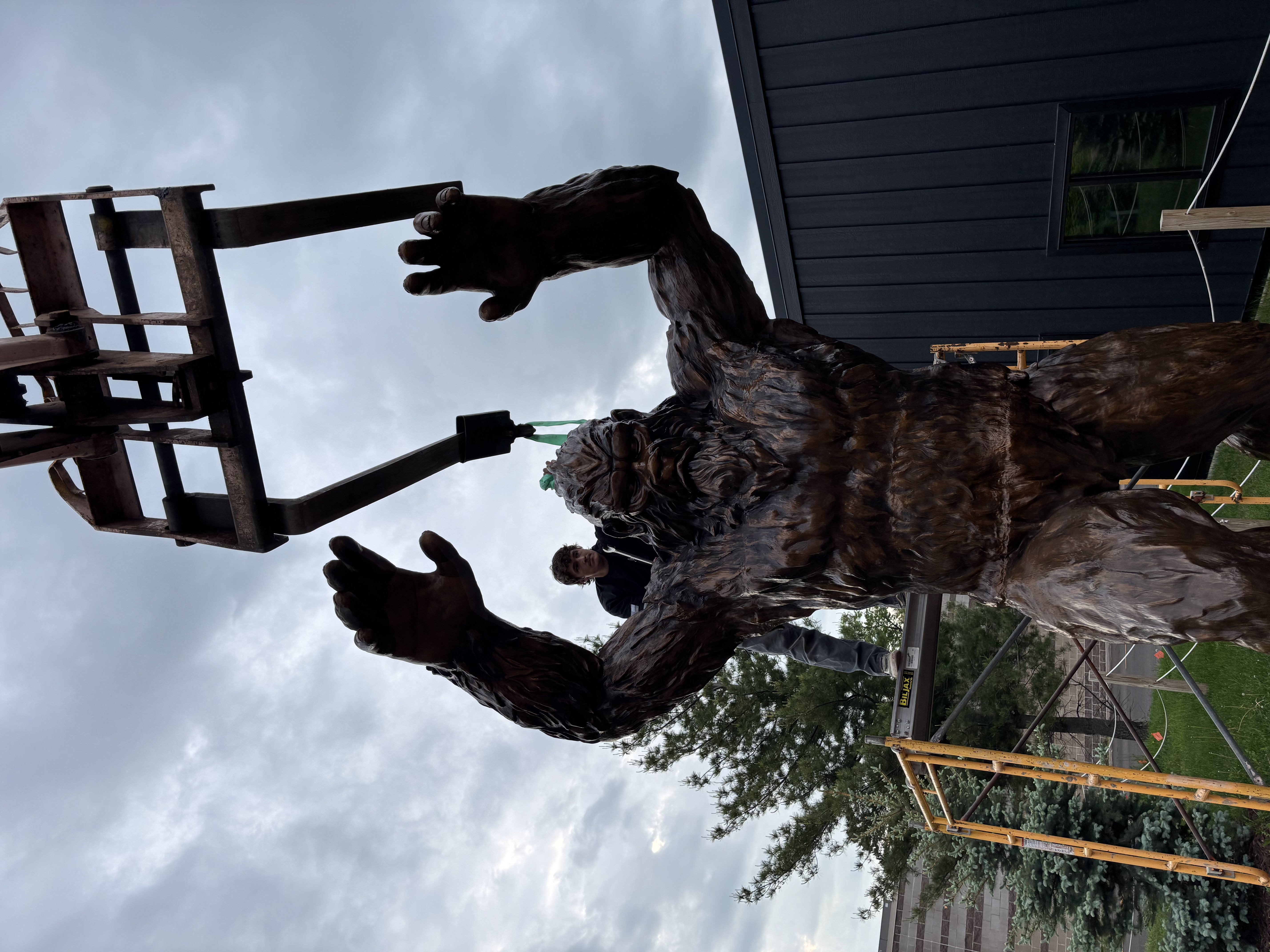
Smaller sculptures may be positioned using relatively simple lifting equipment, while larger life-size and monumental statues may require a crane, forklift, telehandler, or similar equipment.
A crane can carefully lift the sculpture from the transport vehicle and position it directly over the prepared foundation.
For many projects, this is one of the most exciting parts of the entire process.
After months of design, sculpting, casting, and finishing, the statue is finally placed in the location where it may remain for generations.
What Happens on Installation Day?
Every project is different, but most bronze statue installations follow a similar process.
1. The Site Is Prepared
Before the sculpture arrives, the foundation, pedestal, or mounting area should be finished and ready.
The installation team also confirms that trucks, cranes, or other equipment can safely reach the site.
2. The Statue Is Delivered
The sculpture arrives carefully secured for transportation.
Protective materials are removed and the statue is inspected before installation begins.
3. The Statue Is Lifted Into Position
The sculpture is carefully lifted using the appropriate equipment.
This step requires precision because the statue must be placed correctly in relation to the foundation, surrounding landscape, and intended viewing angle.
4. The Statue Is Anchored
Once the sculpture is positioned, it is securely attached to the foundation or pedestal.
The installation team checks that the statue is stable and level.
5. Final Adjustments Are Made
Any necessary touch-ups or minor adjustments can then be completed.
The surrounding area may also be prepared for landscaping, lighting, signage, plaques, or an upcoming unveiling.
How Long Does Bronze Statue Installation Take?
Installation time depends on the size and complexity of the project.
A straightforward life-size statue on a prepared foundation may be installed within a few hours.
Larger projects may take longer because of:
- Crane coordination
- Multiple sculpture sections
- On-site assembly
- Complex anchoring
- Pedestal construction
- Landscaping
- Lighting installation
- Road or pedestrian closures
The most important factor is making sure the site is fully prepared before the sculpture arrives.
What About Pedestals and Plaques?
Many bronze statues are displayed on a pedestal or paired with a commemorative plaque.
A pedestal can elevate the sculpture, increase visibility, and create a more formal monument.
Common pedestal materials include:
- Concrete
- Granite
- Stone
- Brick
- Architectural masonry
Plaques can also provide important context about the person, organization, event, or story represented by the sculpture.
When planning an installation, it is helpful to think about the statue, pedestal, plaque, landscaping, and lighting as part of one complete design.
Do You Need a Permit to Install a Bronze Statue?
It depends on the location.
A sculpture installed on private property may have different requirements than one installed at a university, public park, municipal plaza, business, or historic site.
Possible requirements may include:
- Building permits
- Engineering approval
- Planning or zoning approval
- Historic preservation review
- Public art approval
- Utility clearance
- Right-of-way permits
Because requirements vary by location, it is a good idea to check with local authorities early in the planning process.
For larger commercial or public projects, facilities teams, contractors, engineers, or local officials may also be involved.
Why Installation Planning Matters
A bronze statue is designed to last for generations, so the installation should be treated with the same care as the sculpture itself.
Proper planning helps ensure that:
- The statue is safely supported
- The sculpture is positioned correctly
- The installation site is accessible
- The foundation is appropriate
- The statue is protected during transport
- The final presentation matches the original vision
Thinking through these details early can make installation day much smoother.
From the Foundry to Its Final Home
Installation is the final step in a long creative process.
By the time a bronze statue reaches its permanent location, it may have passed through the hands of sculptors, mold makers, foundry workers, welders, patina artists, engineers, transport crews, and installers.
Then, after months of work, the sculpture finally reaches the place it was created for.
Whether it is honoring a founder, athlete, loved one, community leader, historical figure, or meaningful moment, proper installation helps ensure that the finished statue can stand safely and beautifully for years to come.
If you are considering a custom bronze statue and have questions about design, size, installation, or the overall process, Big Statues can help guide you from the initial concept through final placement.
The Latest from Big Statues
How to Create a Custom Bronze Statue from Photos
Custom Statue Guides
Behind the Mascots | The History of some of our most Iconic Bronze Mascots
University, Custom Bronze Statue, Mascot, Graduation, History
